
How to Inventory Business Equipment Without Barcodes
Barcode-based inventory tools assume every asset arrives with a scannable code. Real business equipment rarely does. A compressor, a forklift, a rack of networking gear, a shop full of power tools — they carry a printed nameplate with a brand, model, and serial, and nothing to scan. Here is how to inventory that gear without sticking a barcode on all of it first.
Why barcodes fail for installed equipment
The barcode model has a hidden setup cost: someone has to generate, print, and apply a label to every asset before the system is useful. For a warehouse of equipment that is already installed or already in service, that pre-work is exactly the project that never gets done. Meanwhile the information you actually need is already printed on the equipment — on the rating plate or the manufacturer’s sticker.
Read the nameplate instead
Every serious piece of equipment carries a nameplate: manufacturer, model number, and a serial number, often with voltage, capacity, or a date. That plate is the asset record waiting to be captured. Instead of barcoding everything, photograph the plate and read the brand, model, and serial straight off it. The capture becomes a one-second action per asset, and you skip the labeling project entirely.
A workflow for a whole site
- Define your locations and sub-locations first — building, room, shelf, or vehicle.
- Walk the site systematically so nothing is captured twice or skipped.
- For each asset, capture the nameplate and confirm the model and serial it read.
- Add your own field for condition and any internal asset tag you assign.
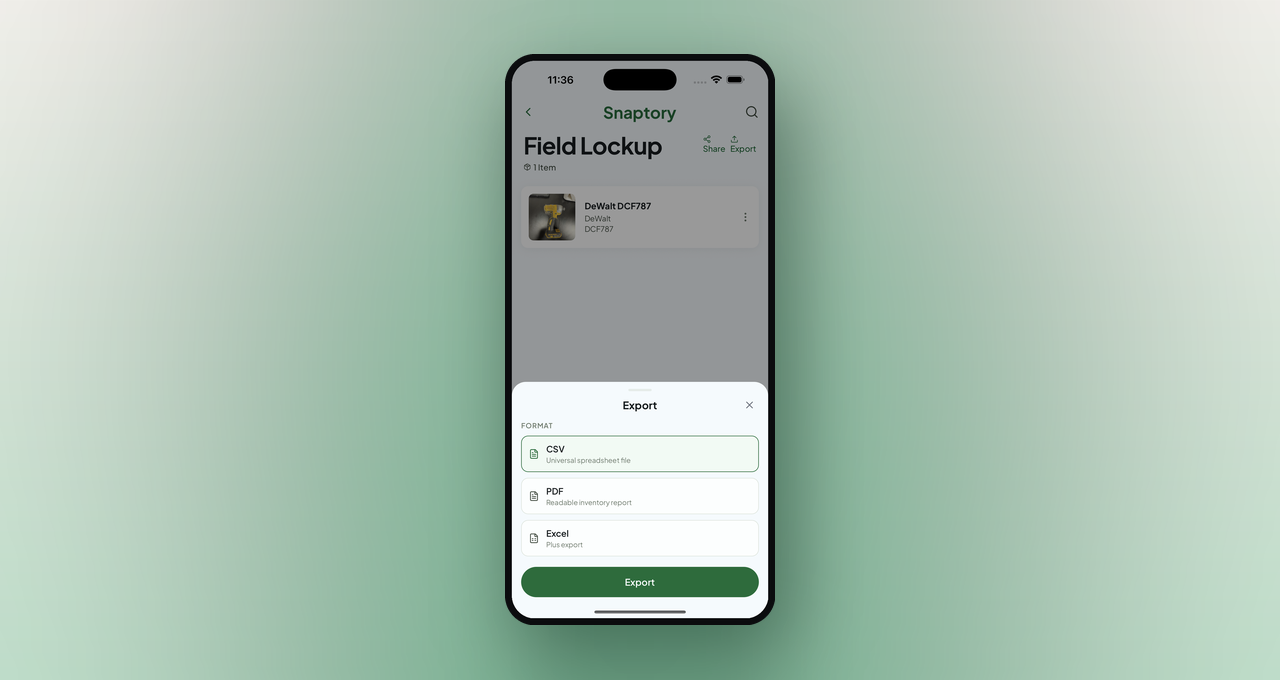
- Export a clean file shaped for your asset register or accounting system.
Why “clean in” beats cleaning up later
Inventories captured by hand in the field arrive as a mess — half-legible serials, inconsistent model formats, gaps. The back office then spends days fixing it. When the serial and model are read off the label and confirmed at the point of capture, the export is correct by construction. There is no downstream cleanup, because the data was never dirty.
Who this helps most
Small contractors tracking tools across trucks, facilities teams cataloging installed HVAC and electrical gear, and any operation handing an inventory task to junior or field staff who will not — and should not have to — type serial numbers accurately by hand.
Related: how to find a serial number on any appliance · what Snaptory is